Linen and Laundry Hygiene in Healthcare: Key Practices to Prevent Infection Spread
Proper linen and laundry management in healthcare settings is essential for preventing infections, especially in environments with limited resources. The main goal is to reduce contamination risks when handling soiled materials such as bed sheets, towels, and clothing used in patient care.
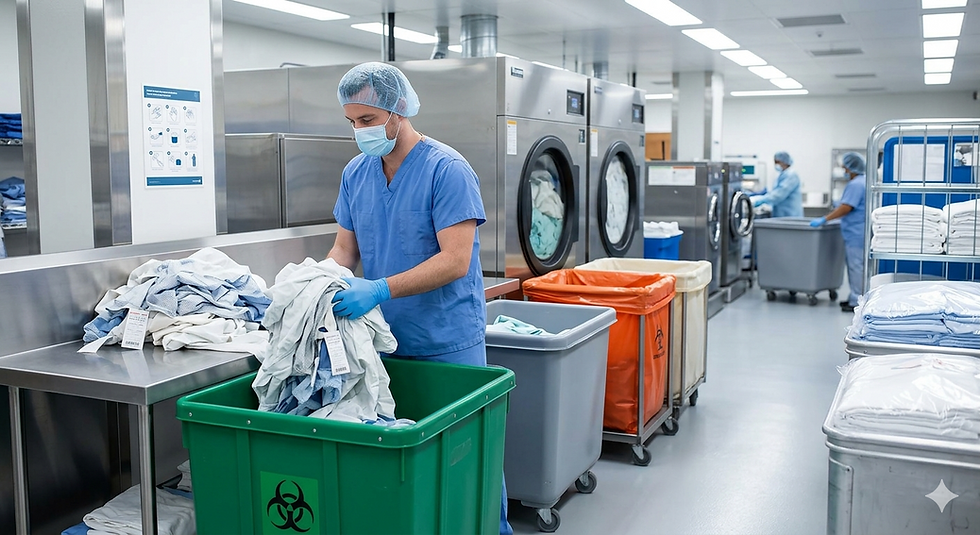
Soiled linen should always be handled with protective gloves and never carried against the body. It should be carefully rolled (not shaken) to avoid spreading contaminants into the air or onto surfaces. Any solid waste, such as feces or vomit, should be removed safely before placing linen into a clearly labeled, leak-proof container located within the patient care area.
Laundry processing should be done in a dedicated, well-organized space that separates clean and dirty items. Staff must follow strict hygiene rules, including handwashing and proper use of protective equipment such as gloves, gowns, and face protection when needed. Washing should ideally use hot water (70–80°C) and detergent, followed by complete drying. When machines are not available, manual disinfection methods like boiling or chemical soaking can be used.
Clean linen must be stored separately in a protected area and transported in clean, designated containers to avoid recontamination. Overall, these procedures are critical for reducing infection spread in hospitals and improving patient safety through better environmental hygiene.
Centers for Disease Control and Prevention. (2024). Appendix D – Linen and laundry management. https://www.cdc.gov/healthcare-associated-infections/hcp/cleaning-global/appendix-d.html


Comments